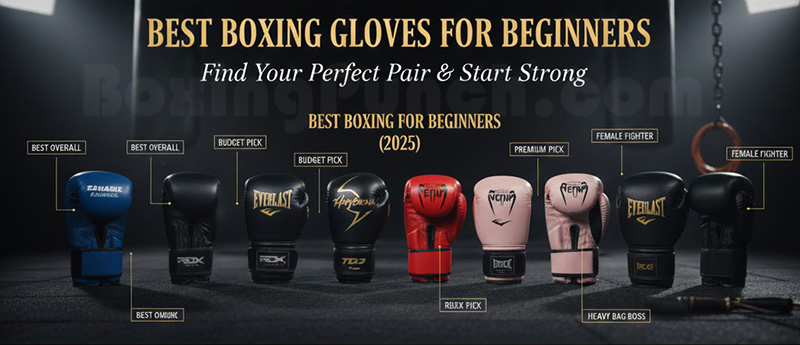
The Ultimate Guide to Finding Your Perfect Pair of Boxing Gloves So, you’re ready to step into the ring, or at least onto the gym floor. But before you throw your first jab, there’s one crucial partner you need to choose: your boxing gloves. This isn’t just about wrapping your hands in leather; it’s about finding an extension of your will, a protector for your bones, and a tool that can elevate your entire training experience. The world of boxing gear can feel like a maze, with endless brands, weights, and styles. But don’t worry—we’re going to navigate it together. This guide will help you understand exactly what to look for, so you can find the perfect pair that feels like they were made just for you. Understanding Boxing Gloves Let’s start with the basics. What are you actually looking at when you pick up a boxing glove? Think of it as a mini-engine of protection. The outer shell, often made from genuine or synthetic leather, is your durability shield. Inside, high-density foam padding absorbs the shock from your punches, protecting your hands and whatever you’re hitting. The thumb is strategically attached to save your face from accidental pokes during defensive moves. And finally, the cuff and closure system—whether Velcro or lace—is your wrist’s best friend, locking everything in place to prevent sprains. Now, let’s talk about that number you always see: 10oz, 14oz, 16oz. This is the weight of the glove in ounces, and it’s not about how heavy your hands will feel, but about how much padding is between your fist and the target. Lighter gloves (like 10oz or 12oz) are great for speed and pad work, offering more feedback. Heavier gloves (like 16oz) are the standard for sparring because they offer more protection for both you and your training partner. For general training and heavy bag work, 14oz is often the sweet spot for most adults. And what about the great Velcro vs. Lace debate? Velcro straps are all about convenience. You can get in and out of them in seconds, making them ideal for busy gym sessions. Lace-up gloves, on the other hand, provide a supremely secure and custom fit, molding to your hand like a second skin. They’re the choice for many professionals, but you’ll need a training partner to help you tie them. For most people, Velcro offers the perfect balance of support and practicality. Boxing Glove Types (Training, Heavy Bag, Sparring, Muay Thai, MMA Gloves) Many beginners think one glove works for everything. But different gloves serve different purposes. And if you choose the wrong one, you won’t just feel uncomfortable — you may actually hurt yourself. Here’s how they differ in simple terms: Training Gloves Best for all-around use. Great for beginners who want one glove that can do everything reasonably well. Bag Gloves (Heavy Bag Gloves) Designed for hitting punching bags. They have denser padding and stronger wrist support to handle impact. These are ideal for anyone searching for: best boxing gloves for heavy bag best gloves for boxing bag boxing gloves for a punching bag Sparring Gloves These are softer and more padded to protect your partner. They usually come in 16-oz or 18-oz sizes. If you want the best sparring gloves boxing brands offer, you want gloves with softer impact foam and better cushioning. Muay Thai Gloves Flexible wrist, softer padding, and designed for clinching. Popular hybrid choice. MMA Boxing Gloves Not the same as boxing gloves! These are for MMA stand-up drills and NOT for full boxing training. The Buying Checklist Your Path to the Perfect Fit Okay, you’re armed with knowledge. Now, how do you actually make the choice? First, get your size right. As a general rule, most adult men start with 14-oz or 16-oz gloves for training. Most adult women often find 12oz or 14oz to be a good fit. If you are heavier or plan to do a lot of sparring, lean towards 16oz. Second, know what a good fit feels like. Your gloves should feel snug but not suffocating. You should be able to make a solid fist without your fingers feeling cramped. The wrist support should feel secure, eliminating any “wiggle” that could lead to injury. Third, set a budget. You can find decent budget boxing gloves under $50, excellent mid-range options between $80-$150, and premium gloves that soar above $300. You often get what you pay for in terms of materials, craftsmanship, and longevity. Finally, trust the legends. There’s a reason why brands like Everlast and Cleto Reyes have been around for so long. While new brands are exciting, a proven track record of protecting fighters’ hands is the most valuable feature of all. Which Boxing Gloves Should a Beginner Buy in 2025? After comparing every major glove on the market — from budget to premium, from sparring training — the best overall beginner glove in 2025 is the Hayabusa T3. But if you’re on a tighter budget, RDX EGO or Sanabul Essential Gel are excellent choices. And if you want style + performance, Venum Elite wins 100%. The most important part? Choose a glove that protects your hands, supports your wrists, and feels comfortable enough that you’ll want to train more. Because your boxing journey doesn’t start with speed, strength, or technique — it starts with the gloves you choose today. Boxing Glove Comparison Chart (2025) Brand & Model Best Use Padding Type Wrist Support Price Level Skill Level Hayabusa T3 Best Overall Medium-Firm ★★★★★ Premium ($150–$200) Beginner–Pro Venum Elite All-Around & Muay Thai Medium ★★★★☆ Higher Mid-Range ($100–$150) Beginner–Advanced RDX EGO Best Budget Firm ★★★☆☆ Budget-Friendly (Under $50) Beginner Sanabul Essential Home Fitness Soft-Medium ★★★☆☆ Budget-Friendly (Under $50) Beginner Everlast Powerlock 2 Heavy Bag Firm ★★★★☆ Mid-Range ($50–$100) Beginner–Intermediate Winning MS600 Sparring (Pro Level) Soft ★★★★★ High-End/Pro Grade (Over $200) All Levels Cleto Reyes Puncher’s Glove Horsehair ★★★☆☆ High-End/Pro Grade (Over $200) Advanced Rival RS100 Sparring + Ergonomics Soft ★★★★★ High-End/Pro Grade (Over $200) Intermediate–Pro Title Pro Style Entry Gym Glove Medium
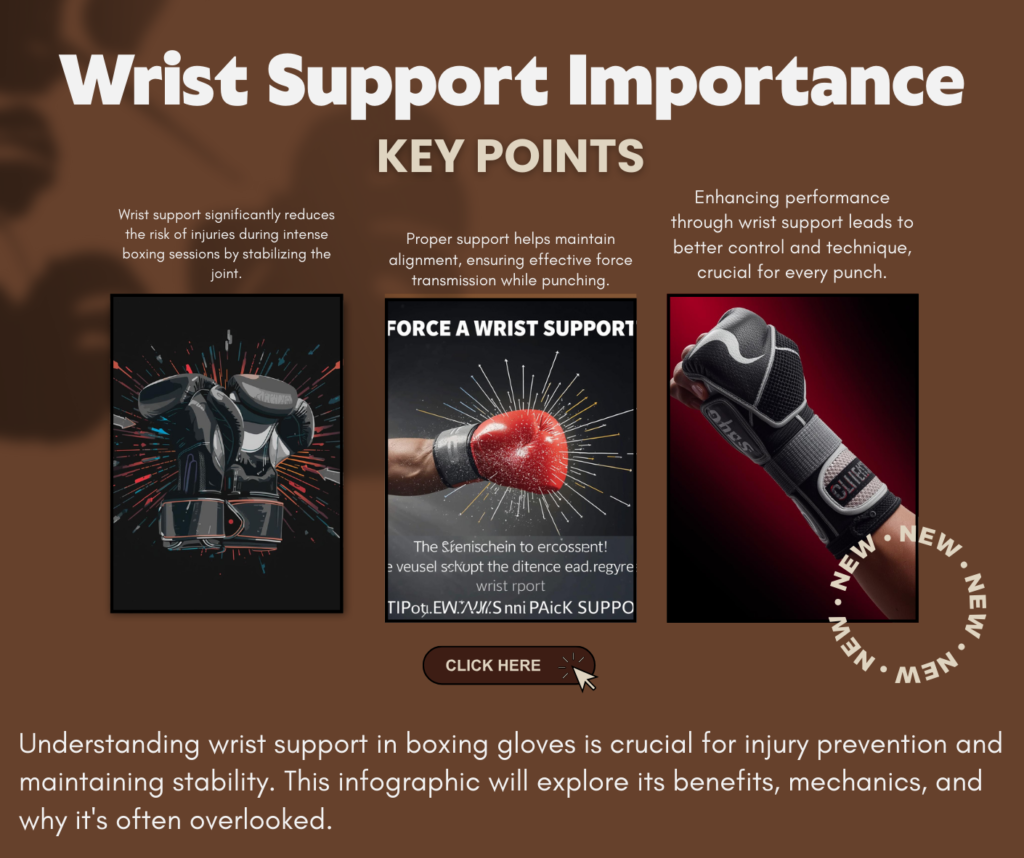
Why Wrist Support Is Essential in Boxing Gloves Introduction – The Hidden Hero of Boxing Gloves Most people buy boxing gloves by looking at the brand, the color, or how thick the padding looks. Very few stop and ask a simple but critical question: How well do these gloves support my wrists and why the wrist support is essential in boxing gloves? In the beginning, wrist support feels like a small detail. You throw a few punches, everything feels fine, and you move on. But boxing has a way of teaching lessons the hard way. One awkward punch on the heavy bag or one tired round of sparring is enough to remind you that your wrists are doing a lot more work than you think. Wrist support isn’t just an extra feature. It’s the quiet protector that keeps you training, improving, and staying injury-free. The Wrist Is Not a Shock Absorber — And Boxing Doesn’t Care Here’s a truth that surprises many fighters: the wrist is not built to absorb force. It’s built to transmit it. In boxing, that distinction matters more than anything else. When a punch lands, the wrist experiences axial load (force traveling straight through the bones) and rotational torque (twisting force). Without wrist support, those forces don’t move cleanly through the forearm. They spill sideways, stressing ligaments that were never designed for repeated high-impact rotation. That’s why wrist injuries are so common even among experienced boxers. Strength alone doesn’t protect the wrist. Stability does. Understanding the Anatomy of the Wrist in Boxing Your wrist is not designed to take direct impact. It’s a complex joint made of small bones, tendons, and ligaments that allow movement, not collision. When you throw a punch, the force travels from your shoulder, through your arm, and finally into your wrist before hitting the target. If your wrist bends even slightly at impact, that force has nowhere safe to go. Instead of transferring power forward, it twists the joint. Over time, this leads to pain, inflammation, and sometimes serious injury. That’s why wrist alignment is everything in boxing. A straight, supported wrist acts like a solid bridge between your fist and forearm. How Wrist Support Improves Accuracy, Not Just Safety Here’s something rarely talked about: wrist support directly improves accuracy. When your wrist is unstable, your brain subconsciously limits punch commitment. You hesitate. You shorten punches. You pull power at the last second to protect yourself. With solid wrist support: Punches travel straighter Knuckle alignment improves Target accuracy increases This is why fighters often feel “sharper” immediately after switching to gloves with better wrist structure. A Precision Joint Forced Into a Power Sport The human wrist is built for dexterity, not destruction. It allows rotation, flexion, and fine motor control. Boxing asks it to do the opposite: stay rigid while absorbing impact forces that can exceed several times your body weight. Every punch creates: Axial compression (force traveling through the bones) Shear force (sideways stress) Rotational torque (twisting on impact) Without wrist support, those forces don’t move cleanly through the forearm. They attack ligaments, strain tendons, and destabilize joint alignment. Over time, even “correct” punches become damaging. Wrist support exists to force the wrist into a mechanically safe position — straight, locked, and aligned. What Wrist Support in Boxing Gloves Really Means Wrist support is not just about tightness. It’s about structure. Good boxing gloves are designed to hold your wrist in a neutral position, preventing unnecessary movement while still allowing comfort. This support comes from a combination of padding around the wrist, the length of the cuff, and the closure system. When all three work together, your wrist stays locked in place during punches, blocking dangerous angles that cause strain. Think of it like wearing a seatbelt. You don’t notice it when everything is fine, but the moment something goes wrong, it saves you. Fatigue Changes Everything — And Wrist Support Compensates Early in a session, good technique can hide weak support. But fatigue changes mechanics. Shoulders drop, elbows flare, wrists loosen. This is when injuries happen. Proper wrist support compensates for: Declining form Slower reaction time Reduced muscular control In late rounds, wrist support isn’t just helpful — it’s protective. How Wrist Support Prevents Injuries Poor wrist support is one of the most common causes of boxing-related injuries. Sprains, tendon inflammation, and chronic wrist pain often don’t come from one big mistake, but from hundreds of small, unsupported impacts. Every time your wrist bends slightly on contact, it creates micro-trauma. Over weeks and months, this adds up. Suddenly, even light training becomes painful. Strong wrist support reduces these repeated stresses and allows your body to recover properly between sessions. In short, wrist support protects not just today’s workout, but your future in boxing. Why Even “Light” Training Destroys Unsupported Wrists Over Time Many boxers assume wrist injuries come from hard sparring or knockout punches. In reality, most damage happens during: Heavy bag rounds Pad work Repetitive combo drills These sessions involve thousands of impacts per week. Even small alignment errors add up. This is where wrist support becomes a long-term injury prevention tool, not just a safety feature. Without proper support, the wrist undergoes: Repeated micro-bending Tendon overload Gradual ligament weakening This leads to chronic pain that doesn’t disappear with rest alone. Why Wrist Alignment Is the Difference Between Power and Injury A punch is not just an arm movement. It’s a kinetic chain. Power starts at the ground, flows through the legs and hips, rotates the torso, travels down the shoulder and arm, and finally exits through the knuckles. The wrist is the last checkpoint. If that checkpoint fails: Power leaks Accuracy drops Injury risk spikes Think of punching like cracking a whip. If the handle bends, the energy collapses. Wrist support keeps that handle solid so energy transfers cleanly and safely. This is why elite fighters obsess over wrist stability even more than knuckle padding. Where Wrist Support Fits In The Biomechanics of a Punch A